Psychology
Dysregulated Empathy
When caring becomes a liability
Dysregulated empathy shows up when your empathic response is out of proportion to the situation or when your boundaries collapse under the weight of someone else's distress.
Essays on healing, psychology, trauma, and the mechanics of breaking cycles

Their functions within a relationship
Defensiveness, shutdown, and criticism usually function as a self-reinforcing protection loop: each behavior is trying to reduce emotional threat in the moment, but together they steadily erode safety, trust, and intimacy in the relationship.

When caring becomes a liability
Dysregulated empathy shows up when your empathic response is out of proportion to the situation or when your boundaries collapse under the weight of someone else's distress.

Why treating abuse as a "women's issue" obscures the psychology of harm
Framing abuse only as a "women's issue" obscures the underlying psychology of harm and makes it harder for people of any gender to heal or seek help.

What happens when honesty costs you — and silence becomes the only safe option
When someone can't tolerate being clearly seen, they don't move toward repair — they move toward retaliation. This isn't communication. It's conditioning.

When victims are framed as perpetrators
Reactive abuse occurs when someone who is being abused fights back or reacts strongly, and their reaction is then used as evidence that they are the real abuser.

How unresolved trauma creates invisible patterns
Unprocessed trauma doesn't just fade into the background. It lives in your body, your reactions, your relationships — often invisible to you, but shaping everything.
Psychological, Life, and Wellness Domains
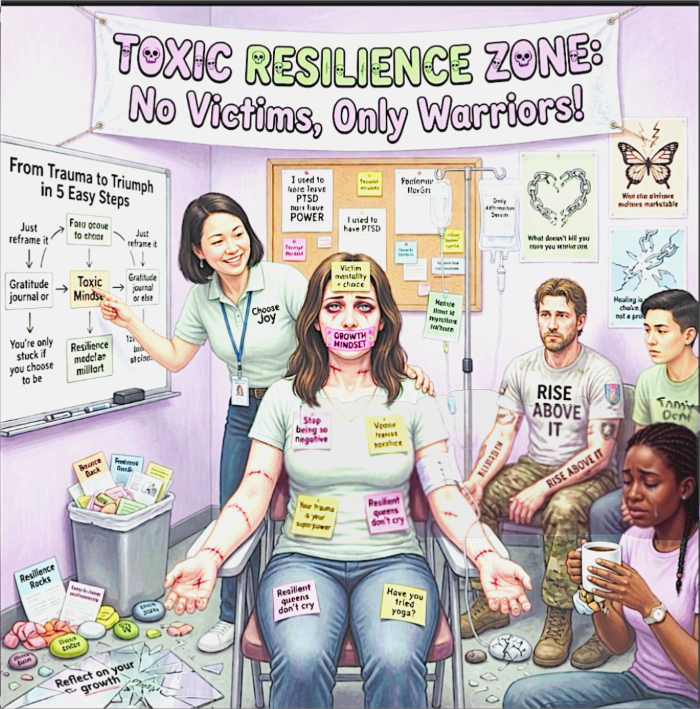
A look at resilience culture, and how it can become toxic when forced on trauma victims. Resilience is a positive attribute but not when it is used to rush healing or pressure victims into healing quickly. Unfortunately resilience becomes toxic when it prioritizes productivity over healing, invalidates pain, forces positivity, shames vulnerability, and ignores trauma.
Psychological, Life, and Wellness Domains
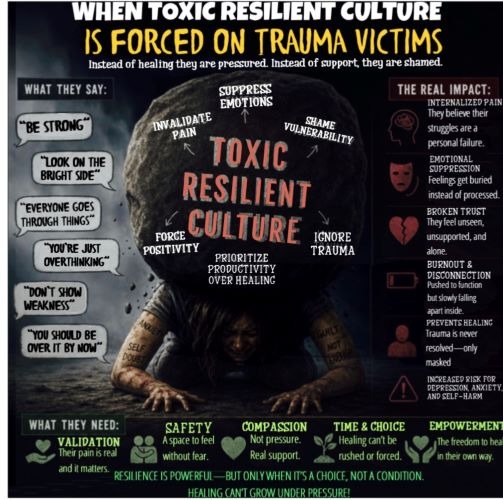
A look at resilience culture, and how it can become toxic when forced on trauma victims. Resilience is a positive attribute but not when it is used to rush healing or pressure victims into healing quickly. Unfortunately resilience becomes toxic when it prioritizes productivity over healing, invalidates pain, forces positivity, shames vulnerability, and ignores trauma.